An arborist is a trained tree specialist who studies, diagnoses, and cares for trees — everything from planting and pruning to identifying disease, structural risk, and the underlying causes of decline. But that one-line definition covers a wide range of work, and not every arborist does the same job.
After nearly five decades in this field, I’ve found that most people asking this question are really asking a more specific one: do I need someone to trim my tree, or do I need someone to tell me why it’s dying?

What Arborists Actually Do
Day-to-day, an arborist’s work can include:
- Pruning and structural maintenance — shaping growth, removing hazardous limbs, and improving a tree’s long-term structure
- Diagnosing disease, pests, and decline — identifying what’s actually wrong before recommending treatment
- Risk assessment — evaluating whether a tree is a hazard to people or property
- Planting and species selection — matching the right tree to the right site, something I see get overlooked constantly
- Soil, irrigation, and root zone management — because most tree problems don’t start in the canopy; they start below ground
Some arborists specialize in one or two of these. Others, like me, work across all of them because the causes of tree failure are rarely isolated to just one system.
Arborist vs. Consulting Arborist — What’s the Difference?
This is the distinction that actually matters when you’re hiring one:
A tree service arborist typically climbs, prunes, and removes trees — the hands-on work.
A consulting arborist does something different: independent diagnosis and strategy, without an incentive to sell you removal, treatment, or installation.
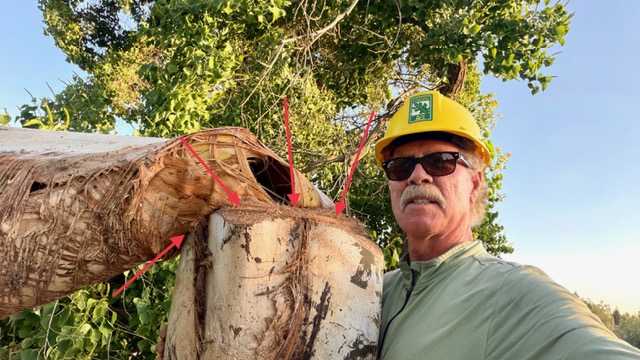
I don’t climb trees or run a crew. My job is to investigate — site conditions, planting history, irrigation, soil — and tell you what’s actually happening and why, the same way I approached a golf club in Mexico City where more than 90% of the palm population was failing before the property even opened. The answer wasn’t disease. It was planting depth, irrigation, and soil conditions compounding each other for years before anyone noticed.
That independence is the whole point of hiring a consulting arborist: the diagnosis isn’t shaped by what services the company happens to sell.
Not All “Arborists” Are Certified
Anyone can call themselves a tree expert. Not everyone has earned the right to.
An ISA Certified Arborist has passed an exam administered by the International Society of Arboriculture covering tree biology, diagnosis, and best practices—and must complete continuing education to maintain the credential.
Membership in the American Society of Consulting Arborists (ASCA) goes a step further, signaling a specific focus on independent consulting work rather than tree care sales. You can read more about my background and credentials.

When You Actually Need to Hire One
Not every tree problem needs a consulting arborist. But a few situations almost always do:
- A tree is declining, and nobody can explain why—especially if it’s already been “treated” without improvement. This is where forensic tree analysis comes in — tracing a failure back to its actual root cause instead of guessing.
- You’re building near mature trees — construction is one of the most common (and preventable) causes of tree failure, and pre-construction tree protection has to happen before the first shovel goes in the ground, not after.
- A tree caused damage, or you’re facing litigation — property damage, personal injury, or boundary disputes involving trees usually require documented, defensible findings from an arborist expert witness.
- You’re planning new plantings on a large property — a golf course, HOA, or commercial site — and want to avoid repeating a mistake like the one in Mexico City. A proper tree assessment and valuation up front is far cheaper than replacing hundreds of trees later.
A Few Common Questions
Is an arborist the same as a landscaper?
No. A landscaper designs and installs outdoor spaces. An arborist specializes specifically in tree health, biology, and risk — though some professionals, myself included, do both.
How much does hiring a consulting arborist cost?
It varies by project scope — a single-tree assessment costs far less than a multi-month site investigation. Most consulting arborists provide a quote after an initial site visit or conversation.
Can an arborist save a dying tree?
Sometimes. It depends entirely on the cause. A tree suffering from a fixable site condition — poor irrigation, girdling roots, planting depth — often has a real chance. A tree with advanced structural decay or root loss usually doesn’t. Part of the job is being honest about which one you’re looking at.
Do I need a certified arborist, or will any tree company do?
For routine pruning, a reputable tree company is often enough. For a diagnosis that will inform a real decision — removal, litigation, a major planting investment — credentials matter, because you’re paying for an opinion you can trust, not just a service.
If you’re dealing with a tree that’s declining and no one’s been able to tell you why, I’d be glad to take a look.