International Tree Consulting in Mexico City
A golf and country club under construction lost most of its palm population before it ever opened. Here’s how I traced the failure back to its root and rebuilt the strategy behind it.
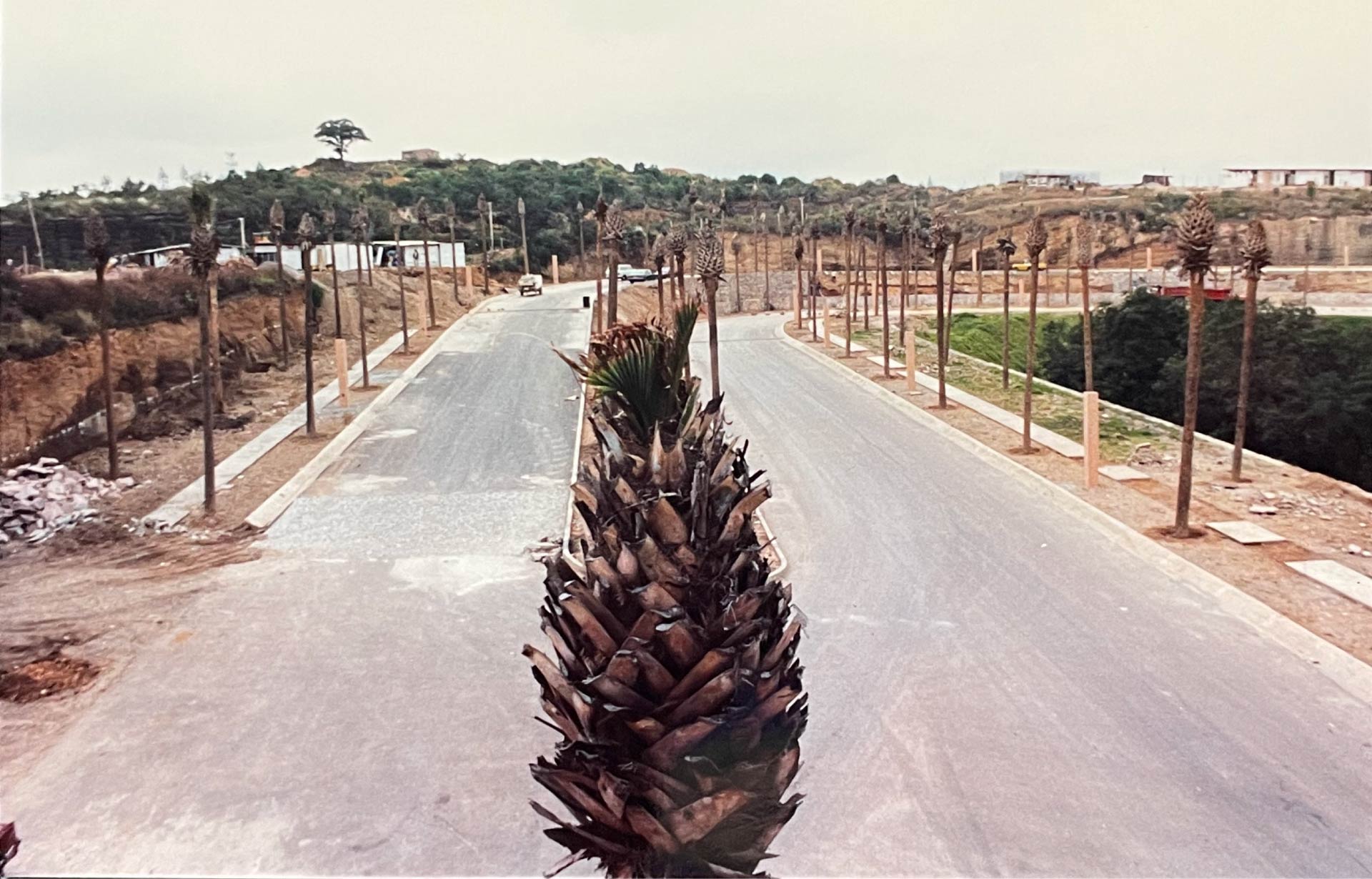
Palm decline visible before the club’s opening
Location
Mexico City, Mexico
Golf & Country Club
Consulting duration
18 months
The Problem
The club was still under construction when I was brought in — 454 palm trees, each standing 27 feet tall, planted across the property to define the finished landscape. Instead, more than 90% of them were dead or in visible decline before the club had a chance to open.
For a project of that scale, that’s not a maintenance issue. That’s a systemic failure, and it needed a forensic answer, not a guess.
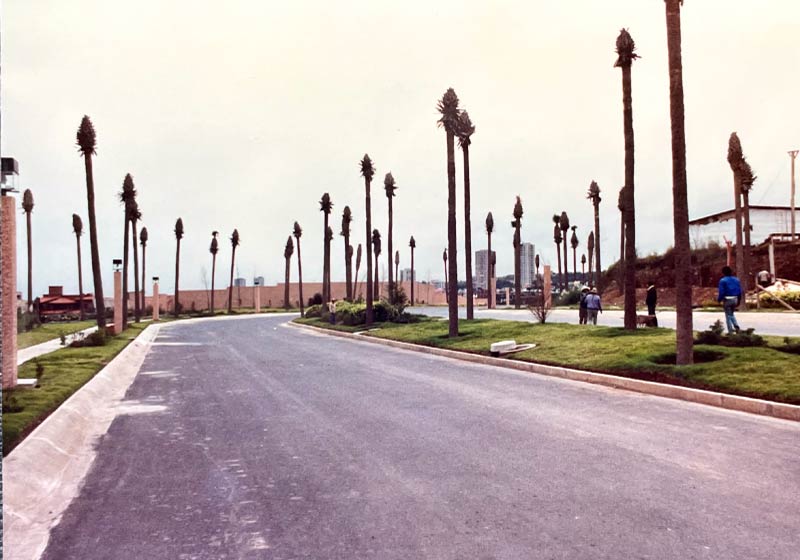
palm trees, measured at 27 ft. before planting — some buried up to 8 ft. below grade at installation
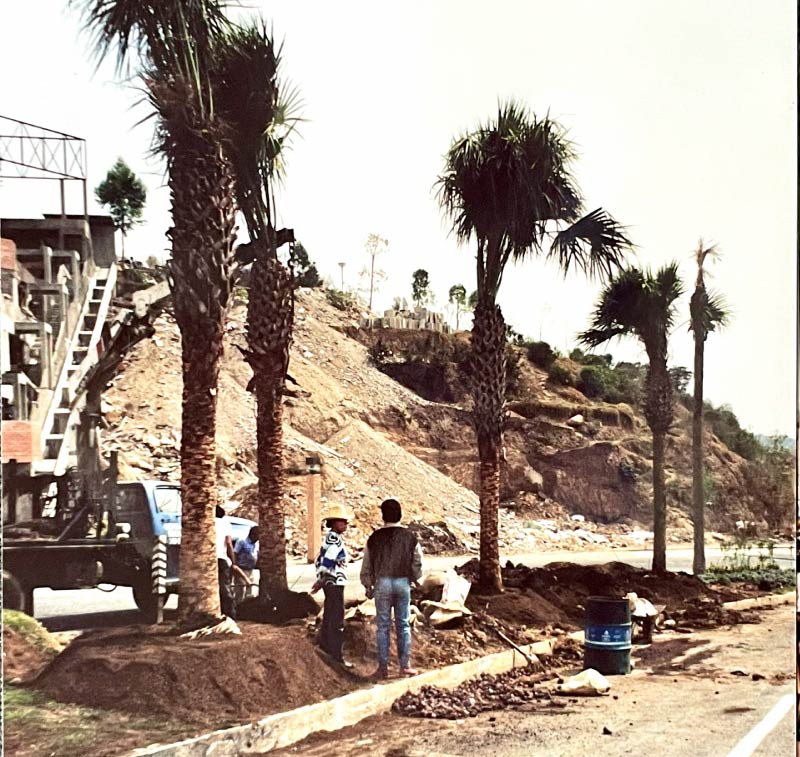
Original installation, during construction
The Investigation
I flew back and forth between California and Mexico City over the course of the engagement, conducting a full site and tree analysis: planting technique, irrigation design, and the underlying soil and site conditions across the property. As with every consultation, I looked past what was visible on the surface to understand the biological history behind the decline.
The Findings
The palms weren’t failing from one disease or one bad batch of stock. Three things were compounding one another: the soil was depleted of nutrients the palms needed to establish, the irrigation was overwatering the root zone, and — the main cause — the palms were planted too deep.
Height at installation had been measured before the trees went into the ground, not after. A palm measured at 35 feet could end up with as much as 8 feet of trunk buried below grade — enough to choke a root system before it ever had a chance to establish. Combined with a species poorly suited to the site to begin with, it was a design already asking too much of the wrong tree in the wrong ground.
By the time a tree’s decline is visible above ground, the real cause has usually been building for years below it.
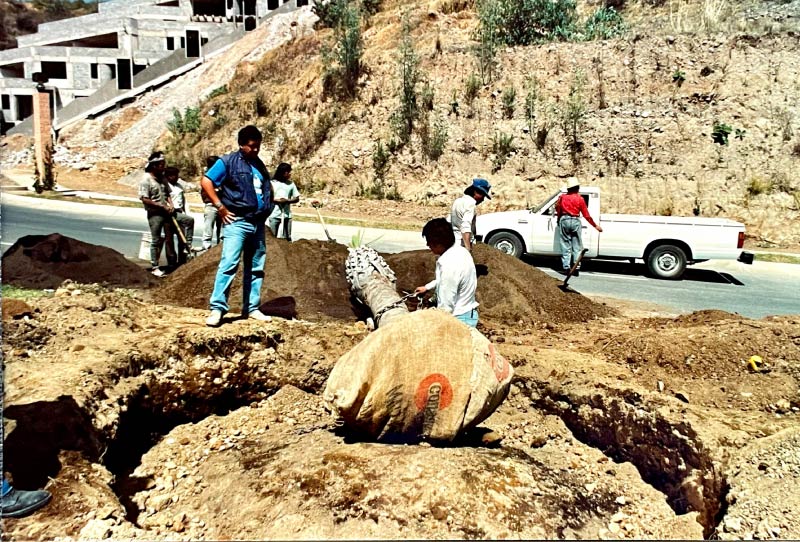
Original installation, during construction
The Recommendation
A new palette planted into the same broken conditions would have simply repeated the failure. My recommendation addressed both layers of the problem at once: change the tree palette to species suited to the site, and correct the irrigation and soil conditions that caused the original planting to fail in the first place.
The Result
Over an 18-month engagement, I worked with the club to develop a revised strategy for its entire tree population — one built to hold up over the long term, not mask a decline that would have resurfaced within a few seasons. It remains one of the landmark projects of my consulting career.
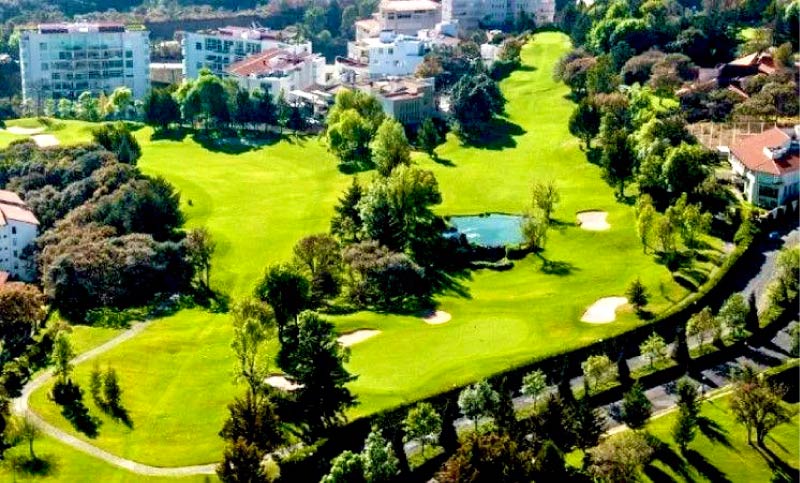
The property today, following the revised tree strategy
Further Reading
Why Urban Trees Die Young
My article on planting failures like this one
Strategic Tree Consulting
How I approach cases like this