You may have seen them. New sprouts growing on the lower trunk, root/trunk flare, or roots of young and adolescent trees. Usually, there are several sprouts growing in a cluster or in small areas. They are growing faster than the other limbs on the tree. They are not what some call “suckers” or “water sprouts”. Most of these sprouts are epicormic, literally new sprouts growing upon the trunk.
MOST EPICORMIC SPROUTS ARE A SIGN – PLEASE TAKE NOTICE!
The tree is trying to tell us something is wrong. Something is causing them stress and, in many cases, left untreated, strain, failure, disfigurement, or death is an upcoming reality.
Epicormic sprouting is a sign of stress or injury to some part(s) of a tree. Epicormic sprouting can be from something beguine as a nail hammered into a trunk to a complex series of escalating events that compound and overtake a tree, ending in death. In many cases, trees mis-pruned are the beginning of the end.
Through forensic analysis we can determine, in many cases, the causal agent of tree disfigurement, failure, and death. It is sad to report mis-pruning is the causal agent of too many tree deaths.
Read through the photos and text. Then look for sprouting on tree trunks in your area. Try and determine the causal agent. It is not usually the outward signs you notice first that reveal the real causal agent. Investigate further. Just because trees can’t talk doesn’t mean they are not trying to communicate. Learn to speak their language. If insects and disease can read trees, so can we.
Take photographs with good light, from many angles and proximinty, some closeup, mid-range and the whole tree. Send them to me with your questions.
It feels great to take action, be a part of change for the betterment of trees, their associates, and us. Sharing this post is the first step in helping to create change. I appreciate your curiosity in trees and helping to create the next phase of modern arboriculture… The implementation of knowledge and understanding.
Change is coming.
What Do you see? I see a tree in trouble. Left alone this tree will decline and die. How can this be? There’s no dead limbs, no discoloration, no damaged leaves. How can I tell? The irrigation system looks good.
Let’s take a closer look…
What about the sprouting on the trunk? Why would a healthy tree need new branches and leaves low on the trunk?
These are injury-related branches. They are called epicormic branches and grow after an injury.
There are two types of epicormic growth
1. Dormant buds – Mostly sproui below an injury
2. Advantitious sprouts – Grow from callus tissue
Knowing the difference is very important but too detailed to explain here.
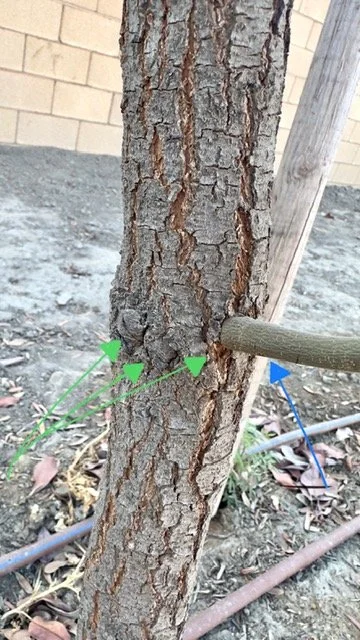
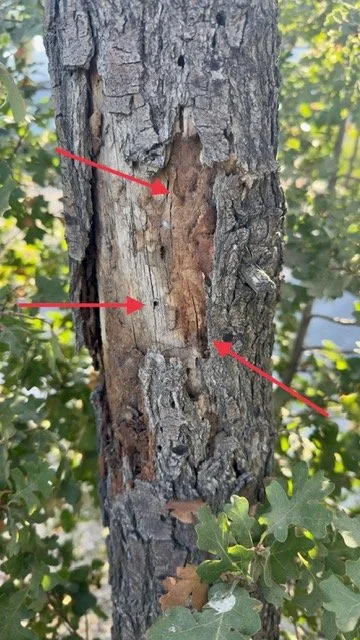
The green arrow show injury from borer insect(s). The tree’s reaction is to grow new branches and leaves.
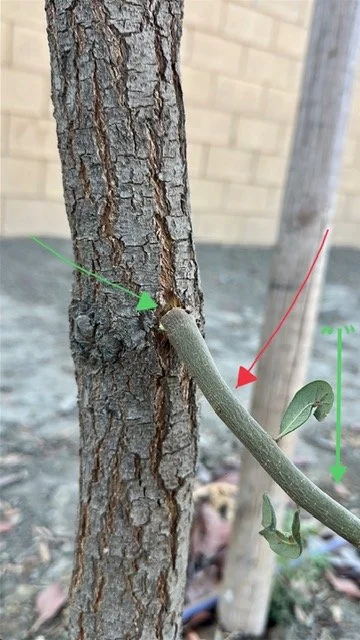
Epicormic shoots (red arrow) can grow fast and are weakly attached for several years or more especially if they grow from callus tissue.
Slight downward pressure (green arrow) separated this shoot from the trunk.
This easy shoot removal would not happen from a primary shoot.
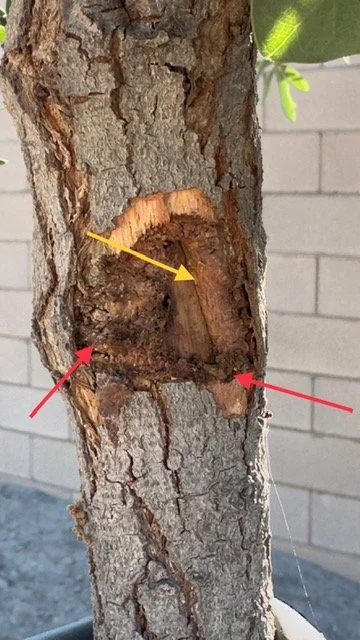
I removed the lose bark and discovered borer insect damage (red arrow). Boring insects do just that – bore into the tree wood and eat the cambium and xylem wood.
Notice (yellow arrow) the new callus/woundwood.
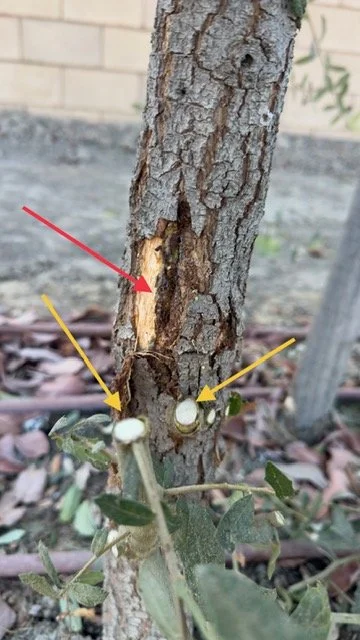
An injured trunk (red arrow) which leads to epicormic sprouting (yellow arrow). this happens after harsh or incorrect pruning too.
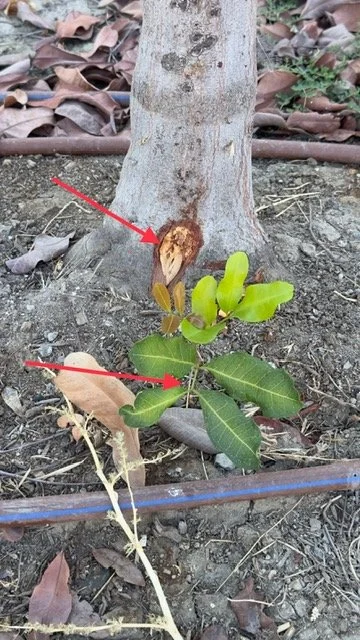
Basal injuries can cause roots to sprout shoots, especially if the roots are near the surface. Prune these early ae possible. Always prune correctly. Shoots from roots can multiply quickly, especially if they’re initial pruning is done incorrectly.
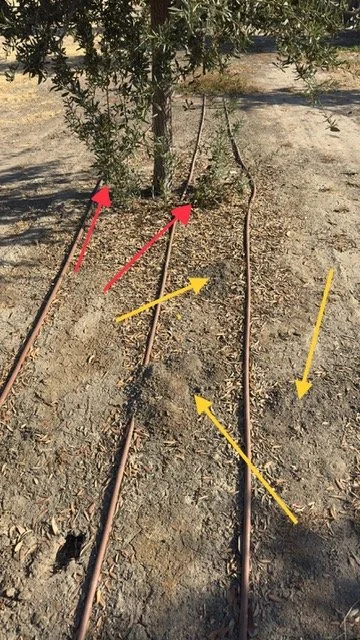
Shoots from roots means roots have been injured (Red arrows). Burrowing rodents (yellow arrows) eat tree roots and cause roots near the soil surface to sprout.
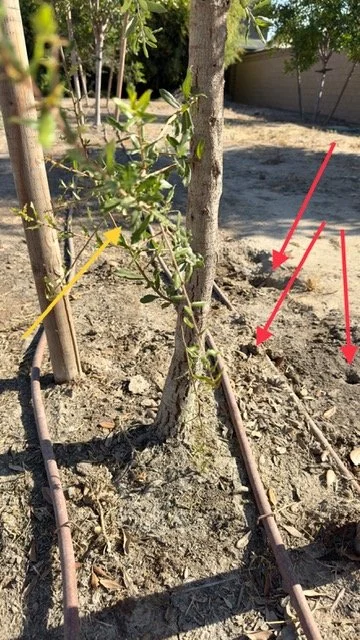
Excessive rodent root injury or rodent injury near the root crown can lead to sprouts on the trunk. This can weaken the tree. Borers can sense stressed trees. They lay their eggs in the bark fissures. The hatched larva bore into the tree.
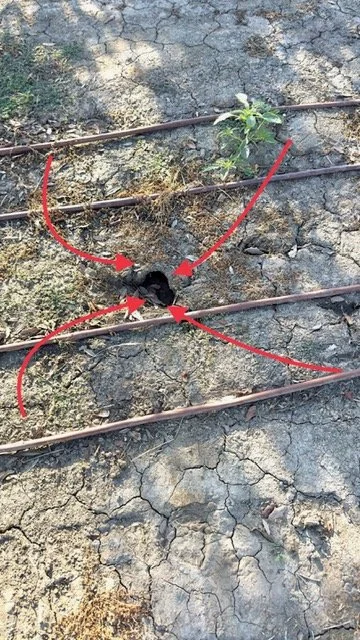
Rodent burrows can drain water from the root zone reducing or eliminating water to the root system.
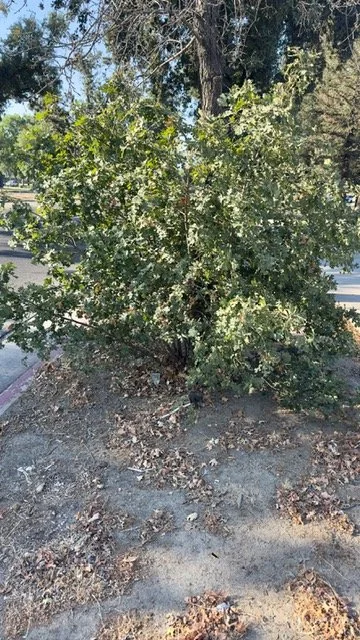
This is an extreme example. What do you think about this oak bush?
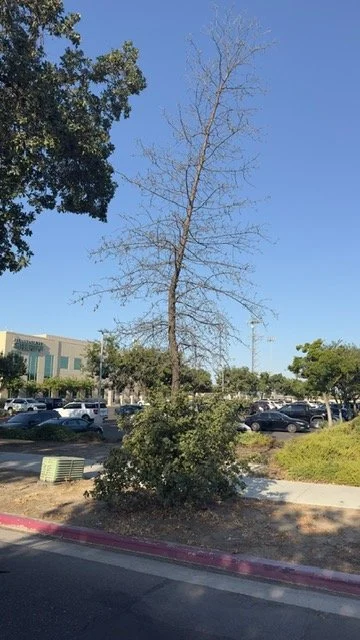
It is not an oak bush, rather an oak tree. Trying to survive. Let’s look closer.
This oak tree is suffering from a sever borer attack. The tree is responding by sending out epicormic shoots below the injuries. The borers have killed the trunk. The only place the tree can produce new shoots is at the base.
Epicormic shoots are a way trees can stay alive after injury. Think about this next time you set out to prune a tree. PRUNING IS AN INJURY.